Handwritten Text Recognition Accuracy in Scanned Forms
Document quality matters more than model selection for improving real-world handwriting recognition.
Handwriting recognition accuracy isn't a single number you can quote at a dinner party and expect to be right twice. It moves based on document quality, how messy the handwriting is, and which model is doing the reading, and those three variables interact in ways that make a flat "HTR accuracy is X%" claim close to meaningless. The key point to consider from the start is that many teams purchasing handwriting recognition tools are focusing on the wrong aspect for improvement. Teams often focus on finding a better model, but the real, more affordable solution lies in improving the document quality, a mistake that frequently leads to disappointment six months after deployment.
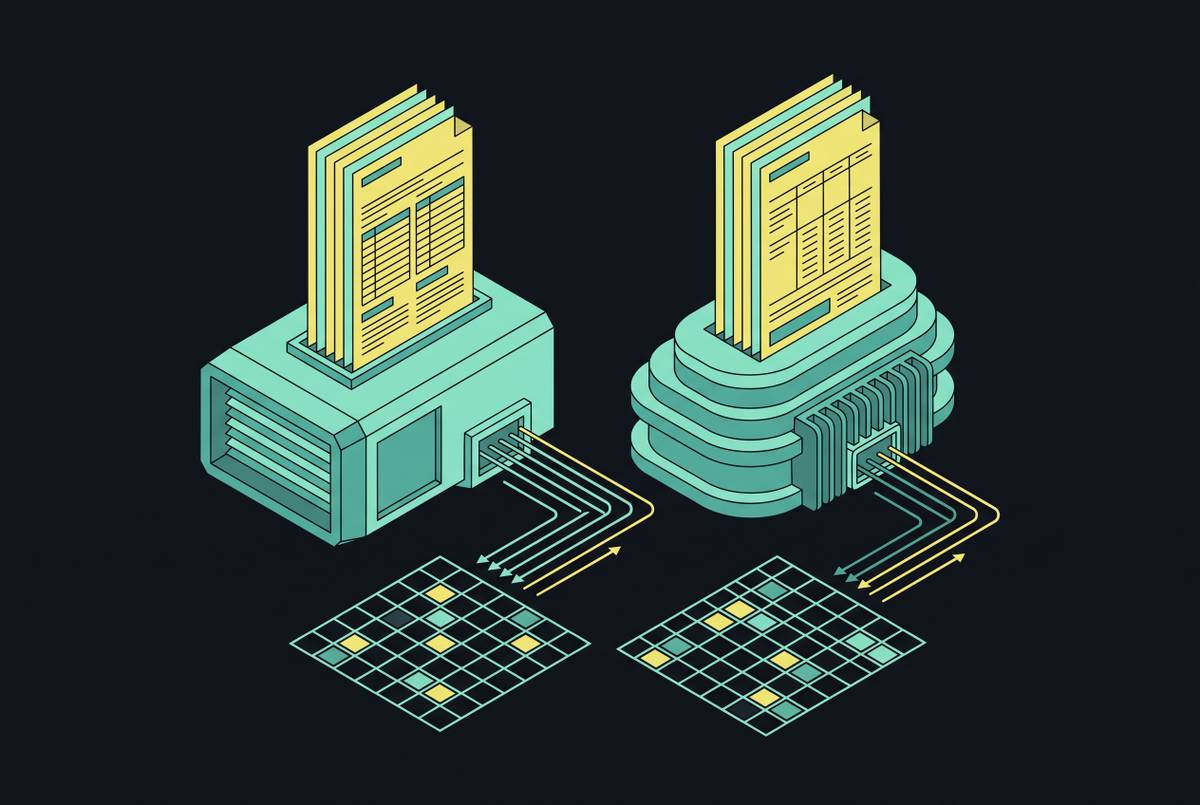
Consider the fundamental difference between OCR and HTR. Optical character recognition for printed text succeeds because fonts have a fixed, limited set of possible shapes. The font Times New Roman is always the same, no matter where it's printed, and there are only a limited number of ways a lowercase "g" can look, so a model that sees enough examples will eventually encounter all the variations. In contrast, handwriting operates under a distinct set of principles. Stroke angle, pen pressure, letter spacing, where a cursive "l" decides to join the next letter, whether someone abbreviates "Street" as "St" or draws something closer to a lightning bolt: none of it is fixed. Forms completed by the same individual on different Tuesdays will not be identical in every detail, much less the forms filled out by different individuals. Printed text relies on a limited alphabet, whereas handwriting is an open-ended set, and this difference alone accounts for the majority of the disparity in accuracy between OCR and HTR, even before considering the models used.
And let’s not forget the paper. Thin paper lets ink seep through, old intake forms get coffee stains, and scanners twist pages a bit, making each text line slightly slanted for the model to adjust. When printed labels and handwritten responses appear side by side on a single line, the model must figure out exactly where the printed part stops and the handwriting begins. When text is typed cleanly for standard tests, accuracy is typically very high, but handwriting accuracy falls far short of that mark, and the challenges of scanned forms further reduce performance. This is because while the layout of a form provides some structure, the combination of printed text and handwriting creates a challenge in distinguishing between the two that a simple handwriting sample doesn't present.
What the standard benchmarks actually measure and what they miss
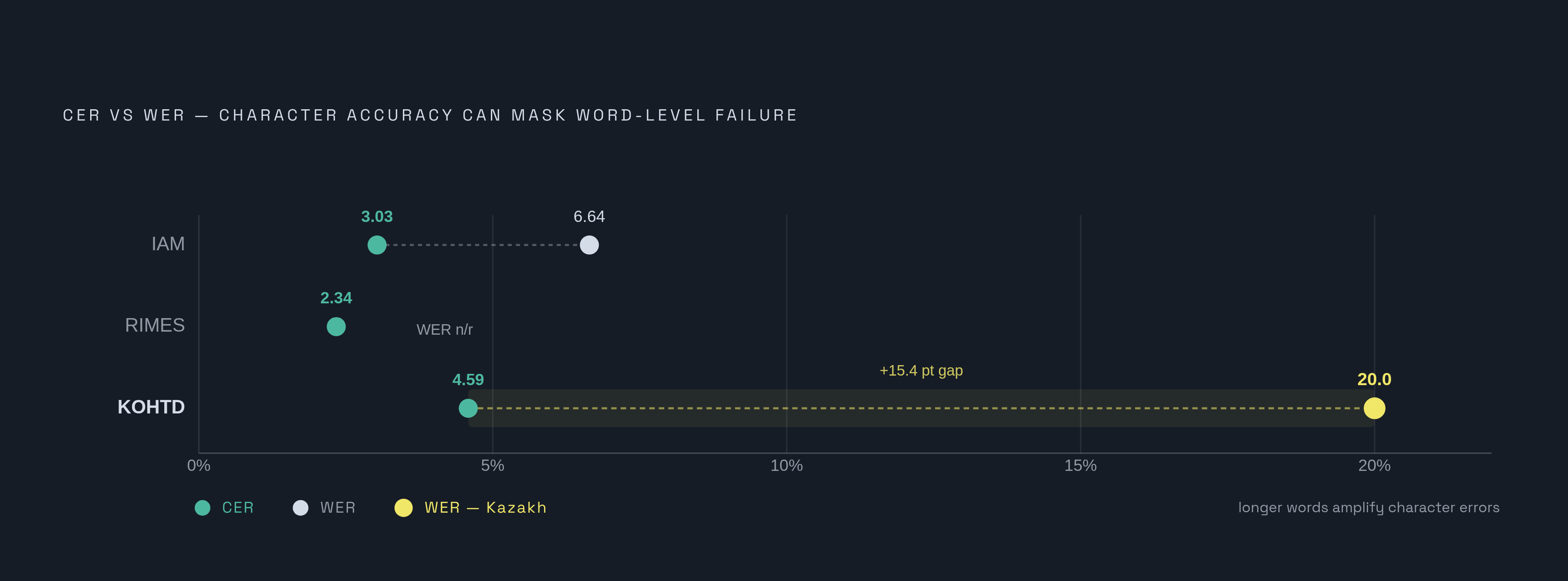
In HTR studies, two key numbers dominate the conversation: Character Error Rate and Word Error Rate. The Character Error Rate metric calculates the number of incorrect characters out of the total number of characters. WER measures errors at the word level, and just one incorrect character in a word can lead to the entire word being marked as wrong.
A low CER sounds like a B-plus. Even a small fraction of incorrect characters, and this can cause significant issues when the data is used in databases or automated systems, as even a single incorrect character in a patient ID or claim number is not a minor mistake. It can point to a different record entirely.
For English HTR, the IAM dataset is the nearest thing to a standard benchmark; studies using it have reported CER scores ranging from higher values down to 2.9%, with newer systems achieving 3.03% CER and 6.64% WER. This dataset only tests clear, handwritten English sentences written on paper, and it doesn’t account for blurry scans, writing in languages that don’t use the Latin alphabet, or cases where the handwriting is boxed inside a printed layout. RIMES, which serves as the French-language equivalent, shows a CER of 2.34%, indicating that languages with Latin scripts and ample resources can achieve comparable performance levels when sufficient training data is available. KOHTD, a dataset for the Kazakh language, presents a contrasting situation: while the CER stands at 4.59% and seems acceptable by itself, the WER soars to 20%. That gap is the tell. Despite the character accuracy appearing quite good, the usability at the word level can be severely compromised, as a script with a greater number of characters per word means that one incorrect character can disrupt more words than it would in English.
Older documents make this gap even more obvious. Layout detection, which means identifying the location of a field on a page, performed well on ADV-FORMS, a collection of about 1,200 questionnaires from the 1930s, achieving over 0.9 precision and recall for most categories. Even when the system correctly identifies where each field is on the page, converting the handwritten text inside them into readable words still yields far too many mistakes, meaning just locating the data isn’t enough to actually extract it accurately. Benchmark results reflect ideal conditions, with pristine samples and carefully curated test sets, which may not accurately represent real-world performance. Actual scanned forms, whether stored in a filing cabinet or on a shared drive, typically fall short of that ceiling, frequently by a significant amount. When someone uses a benchmark number to support a buying choice, they're presenting an ideal outcome as if it were the norm.
How document quality and handwriting variability pull accuracy in opposite directions
Here, we encounter two distinct sets of issues that need to be distinguished: one can be addressed before the model processes the page, while the other cannot.
Document-side problems start with scan resolution. When documents are scanned at a low DPI, the resulting jagged edges and fuzzy lines distort letters before the recognition software can even start. The condition of the paper makes the problem worse, with issues like stains, ink bleeding through from the back of the page, and torn corners further degrading the quality of the scanned document. Poorly designed forms can actually undermine accuracy, often overlooked because their flaws sneak up on the system, crowded fields, minuscule handwriting spaces, and lines that bisect the strokes of letters all clutter the input and make it harder for the model to pick out the right details. The presence of different types of content creates another challenge: when printed labels are placed beside handwritten responses, the model has to adjust its focus in the middle of the line, switching from reading text to interpreting cursive handwriting.
Problems with handwriting are fundamentally different, and improving scanning technology won't solve them. When letters flow together in cursive, it's tough to figure out where one ends and the next starts, which isn't an issue with printed handwriting. Then there’s how much handwriting differs from person to person: each writer forms letters in their own unique way, stretches or squishes them oddly, and uses shorthand that only they understand. Even the same person's handwriting changes, depending on whether they're rushed, tired, or using a different pen. Compared to printed fonts, personal handwriting has much more variation, which is why creating a custom model for each writer seems like a good idea in theory, but fails when you have to process thousands of forms from thousands of individuals.
Which issue should a team prioritize for their budget first? Improving document quality is the most effective solution, yet many teams overlook it and opt for less effective alternatives. By standardizing the intake form, insisting on block print rather than cursive, establishing a minimum field size, and adjusting the scanners, a team can boost accuracy without altering the model. That fix costs less than any other step in the process, yet teams almost always skip it to hunt for a more advanced model instead. For old archives, surveys gathered in the field, or government documents from decades past, the original form design and the paper's condition are fixed, meaning a new intake form won't help. In such situations, the differences are set, and the model must take in whatever information the document provides.
How model architecture shapes what's achievable
Over time, the field has evolved through three distinct stages. At the outset, systems relied on logic that used heuristics and rules to assess the shapes of letters. Next, CNN and RNN combinations emerged, focusing on recognizing patterns in handwriting sequences rather than sticking to set rules. Today's cutting-edge models use transformer architectures, which analyze entire documents in one go rather than piecing together individual line predictions.
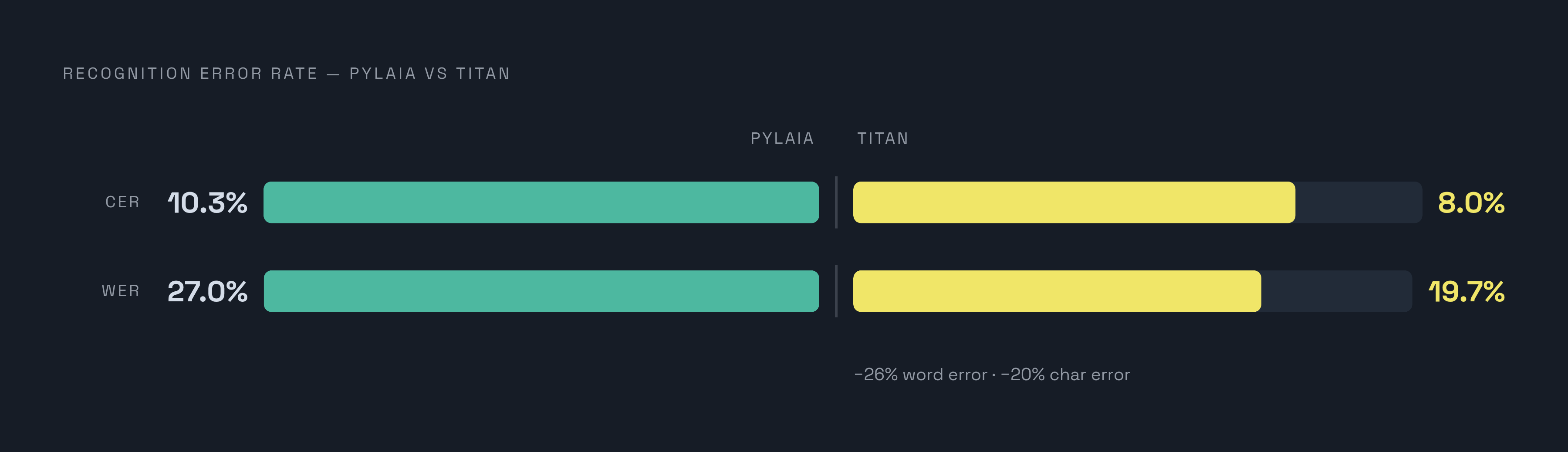
The upper limit was raised by transformers due to their training process. Training on massive text datasets helps a model learn broad patterns in how characters and words usually appear and combine, and then adjusting it further on a particular handwriting style or document format reduces the errors that remain. Transkribus provides a clear illustration of the difference. Its PyLaia model, tested on historical English documents, produced a CER of 10.3% and WER of 27.0%. The transformer-based Titan model achieved significantly better results on the same test set, with CER dropping to 8.0% and WER to 19.7%, which translates to a 20% improvement in character accuracy and a 26% improvement in word accuracy, solely from the switch to the new architecture.
One important point to consider is that the training data used for most transformer models is predominantly made up of Latin scripts. This bias largely stems from the fact that most available large-scale digitized text is in Latin scripts, causing models to perform significantly worse when encountering non-Latin scripts or languages with limited digital resources. A model that handles 16th-century English well might have much more difficulty with a script it hardly encountered during its training.
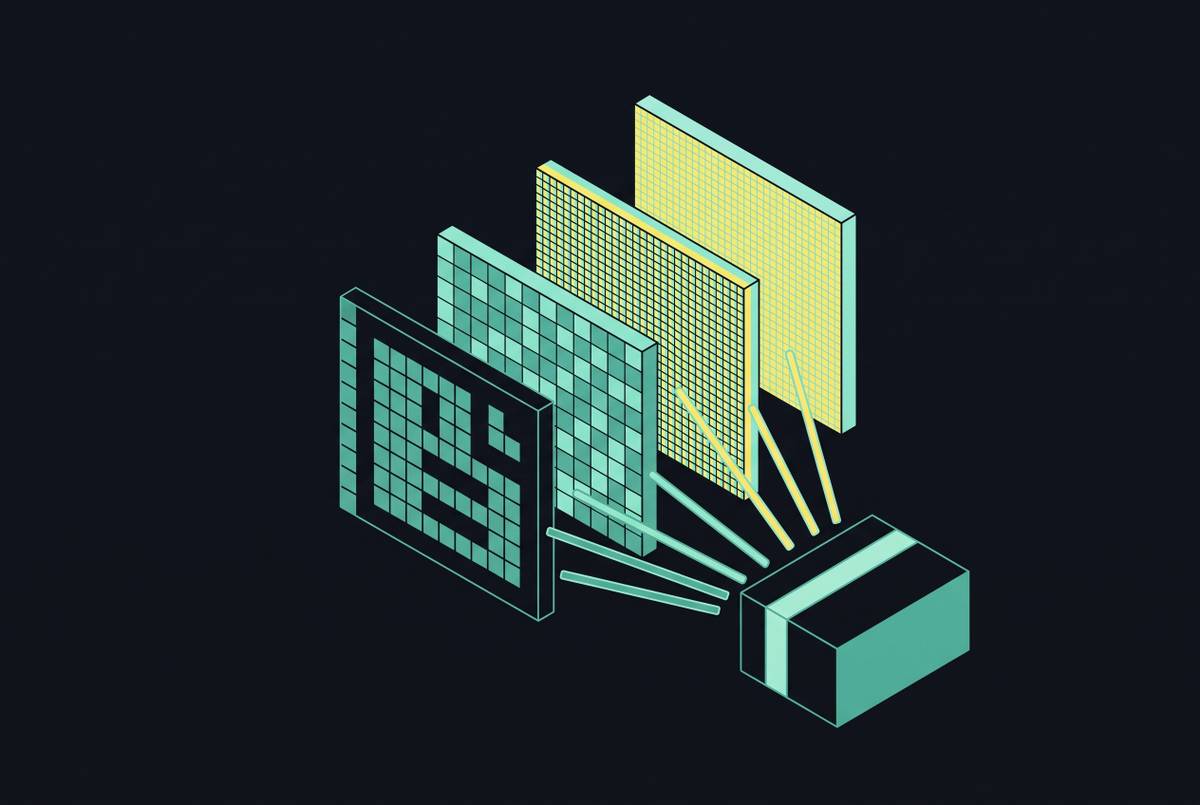
Two methods boost accuracy without requiring additional labeled handwriting data, a valuable advantage, since creating such labeled data is both time-consuming and costly. Self-supervised pre-training, where the model learns patterns from raw, unlabeled text images before fine-tuning, can achieve results similar to traditional supervised training. By artificially creating extra handwriting samples to boost training data, these methods slashed character error rates by 41.1% and word error rates by 28.1% compared to starting entirely from scratch. Meanwhile, transfer learning alone still managed to improve accuracy by 34.4% in CER and 23.5% in WER. Even with these advanced techniques, basic pre-processing steps like noise reduction, straightening skewed scans, and converting images to clean black and white are still crucial, as they occur before the model processes any words and skipping them can lead to avoidable errors.
Where frontier LLMs now fit into the HTR picture
This discovery changed many beliefs about the purpose of specialized HTR tools. Without any adjustments, when transcribing historical handwritten English texts, the 3.5 version of the Sonnet model from Claude achieved a character error rate of 7.3% and a word error rate of 15.9%, outperforming the specialized Titan model from Transkribus by about 10% in character accuracy and 19% in word accuracy. A general-purpose LLM, never trained on this specific handwriting or form layout, beat a model built specifically for the job. Take a moment to absorb that, it directly challenges many of the business proposals claiming HTR requires a custom-built pipeline.
The most advanced results don't need a special system crafted and adjusted just for the particular kind of document being read; this is the main point, more so than any exact figure. A benchmark, backed by the Gates Foundation and testing 17 models against medical forms, adds texture to the claim. The best LLMs in that test hit a median of roughly 85% exact string match accuracy across all forms, which sounds solid until free-text fields often present greater challenges for models. Gemini achieved the highest overall performance and the fewest mistakes in free-text fields, recording a WER of 0.50 and a CER of 0.31. Meanwhile, Some models excel particularly in formatted areas such as dates and numbers. The spread across those 17 models was wide enough that which model a team picks, even within the "frontier LLM" bracket, still moves the needle by a lot.
Before fully automating a review pipeline, consider this warning: studies have found that models may not reliably correct their own mistakes through self-review. The same flaw that led to the initial mistake often remains unaddressed after the model's second attempt. For the time being, humans are still needed for this task, since we can't yet rely on automated self-correction.
Even among specialized studies, one finding stands out as particularly surprising. When tested on handwritten math problems, GPT-4.1-mini was able to produce acceptable transcriptions about 88% of the time, often relying on contextual clues to clarify unclear characters. Knowing a squiggle probably means "x" because the surrounding equation demands an "x" is a genuinely useful trick, and it's one dedicated OCR systems trained purely on pixel patterns don't get to use. Specialist HTR models, when finely tuned to a particular historical collection or form type, can outperform general LLMs on those specific tasks, ensuring they remain valuable in this context. Both methods seem to work well together instead of against each other, with each one being ideal for a particular part of the overall challenge.
What accuracy looks like in practice across sectors using scanned forms
Benchmark scores are a start. What does it really cost an organization to run these forms through a daily pipeline when accuracy rates are in the moderate-to-high range? When you hit a low accuracy rate, that means a significant share of data points pulled in will be wrong and need manual correction, so don’t just glance at those 80-to-95% numbers vendors flaunt as if they’re all the same. That range spans a genuinely large operational gap: lower accuracy rates require more frequent manual review of fields. Sellers usually highlight the highest figures in that range, leaving buyers to find out the lower numbers on their own.
Healthcare faces far greater risks than other sectors, and the gap is significant. Mistakes in handwritten intake forms, prescription notes, and older paper charts can have serious health implications. When these handwritten documents are converted to digital format by HTR, it's crucial that the accuracy is precise at each data point, rather than just averaging out errors across the entire document. Insurance claims combine printed form layouts with handwritten notes, scanned receipts, and physicians’ handwritten documentation, and when accuracy breaks down, it doesn’t just produce a mistake: it delays claim approvals and creates compliance risks. In the legal field, similar risks exist with items like court filings, handwritten notes on cases, and faxes, where misinterpreting a date or a name can lead to actual procedural problems later on.
Historical archives and government records face a double challenge: they have the oldest and poorest-quality scans, along with the most varied and difficult handwriting. Teams handling these documents must adjust their accuracy goals upfront, integrating post-processing and human review as essential steps in their workflow, not just as a backup.
One divide cuts across every sector regardless of what the form is for. Some cloud-based document processing services can accurately read structured fields, checkboxes, signature lines, and labeled boxes that appear in consistent locations. Regardless of the tool used or the industry, areas where users write in their own words are difficult to interpret accurately. The accuracy level that’s good enough for tagging old documents in an archive falls far short of what’s required for entering patient data in a clinic, so teams should choose tools based on their actual use-case standard, not the highest score on a benchmark leaderboard.
How teams can set realistic accuracy expectations and improve outcomes
Before you even think about the model, focus on the document itself. Before diving into models, the biggest gains often come from improving how the forms are scanned, how they’re laid out, and whether the people filling them out have straightforward instructions, changes that outperform switching from one AI vendor’s tool to another.
Choose a metric that aligns with how the form will be used. CER is the appropriate measure when each character is crucial, such as with patient IDs, drug codes, and account numbers, where even one incorrect digit can completely alter the meaning. WER works best for narrative or free-text fields, while exact string match, the standard in the earlier mentioned medical-forms benchmark, is the right measure for structured data extraction, where a field is either correct or not.
Deciding between fine-tuning and using a ready-made model is a crucial choice, not just a step to rush through. General-purpose large language models and some cloud-based document processing services deliver reliable performance on structured forms, without requiring any custom training. If you're dealing with particular historical writing styles, older document types, or languages not using the Latin alphabet, a specialized tool that has been fine-tuned, such as Transkribus's Titan model, is still the better option to begin with, at least until the more general models improve enough to catch up.
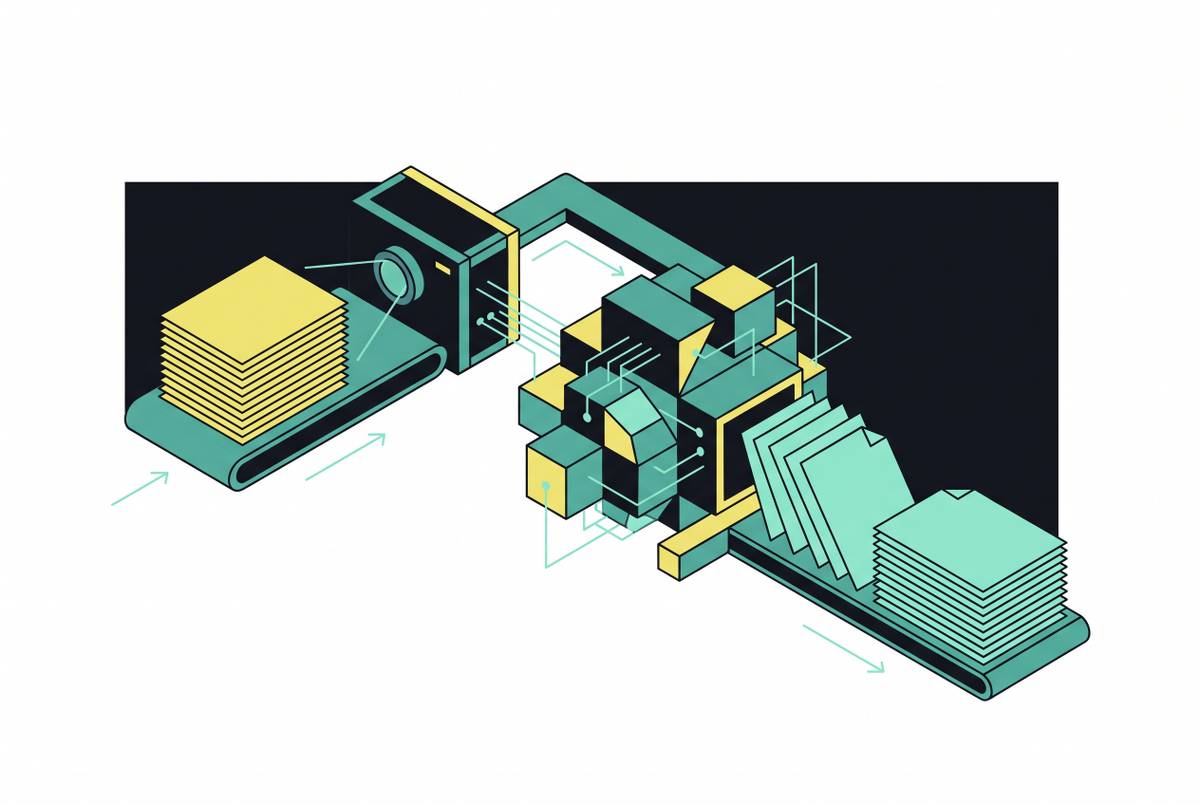
Ideally, post-processing should be an integral part of the architecture from the outset, rather than being added as an afterthought when problems arise. Fixing outputs after the fact, using language models to correct errors, running spell-checks, and discarding low-confidence results based on BERT scores, actually boosts accuracy for poor-quality documents. The ADV-FORMS findings clearly illustrated this, showing BERT scores exceeding 0.8 even when the raw HTR word error rate appeared quite poor by itself. Human review remains essential in high-stakes situations and for low-confidence outputs, particularly because current evidence shows that LLM self-correction isn’t yet dependable enough to replace it.
Here’s a final tip, though it’s often overlooked due to its inconvenience: test with the very documents your team intends to handle, rather than with a neat benchmark sample that doesn’t resemble them at all. Lab datasets don’t capture how badly real-world forms are damaged, how wildly handwriting differs from person to person, or how chaotic their layouts really are. Published benchmarks show what can be achieved in ideal circumstances, so use them as an upper limit for planning, because the actual scans you get will almost never reach that level. The same applies to any group setting up large-scale data processing, because balancing speed, precision, and human checks is essential from the start. It's essential to prioritize strategy and workflow design over tool selection, because even the most capable tool can't compensate for a poorly designed input process.