Citation-ready extraction: what auditability actually requires in regulated document workflows
Regulated document workflows need extraction systems that prove their work, not just get it right.
Most conversations about AI in regulated document workflows get stuck on the wrong question. Teams spend months benchmarking extraction accuracy, running precision and recall tests, stacking vendor claims against each other. Then they go live, a compliance reviewer flags an output, and nobody can explain where the value came from.
That is the actual problem. In regulated environments, the question was never whether the system got it right. The question is whether you can prove it, show your work, and defend the chain of custody from source document to extracted claim. That distinction is not semantic. It has real consequences in audit, litigation, and regulatory examination.
What Auditability Actually Means
The word gets used loosely. People say a system is auditable when they mean it produces logs, or when they mean outputs carry confidence scores. Neither of those things constitutes auditability in any meaningful compliance sense.
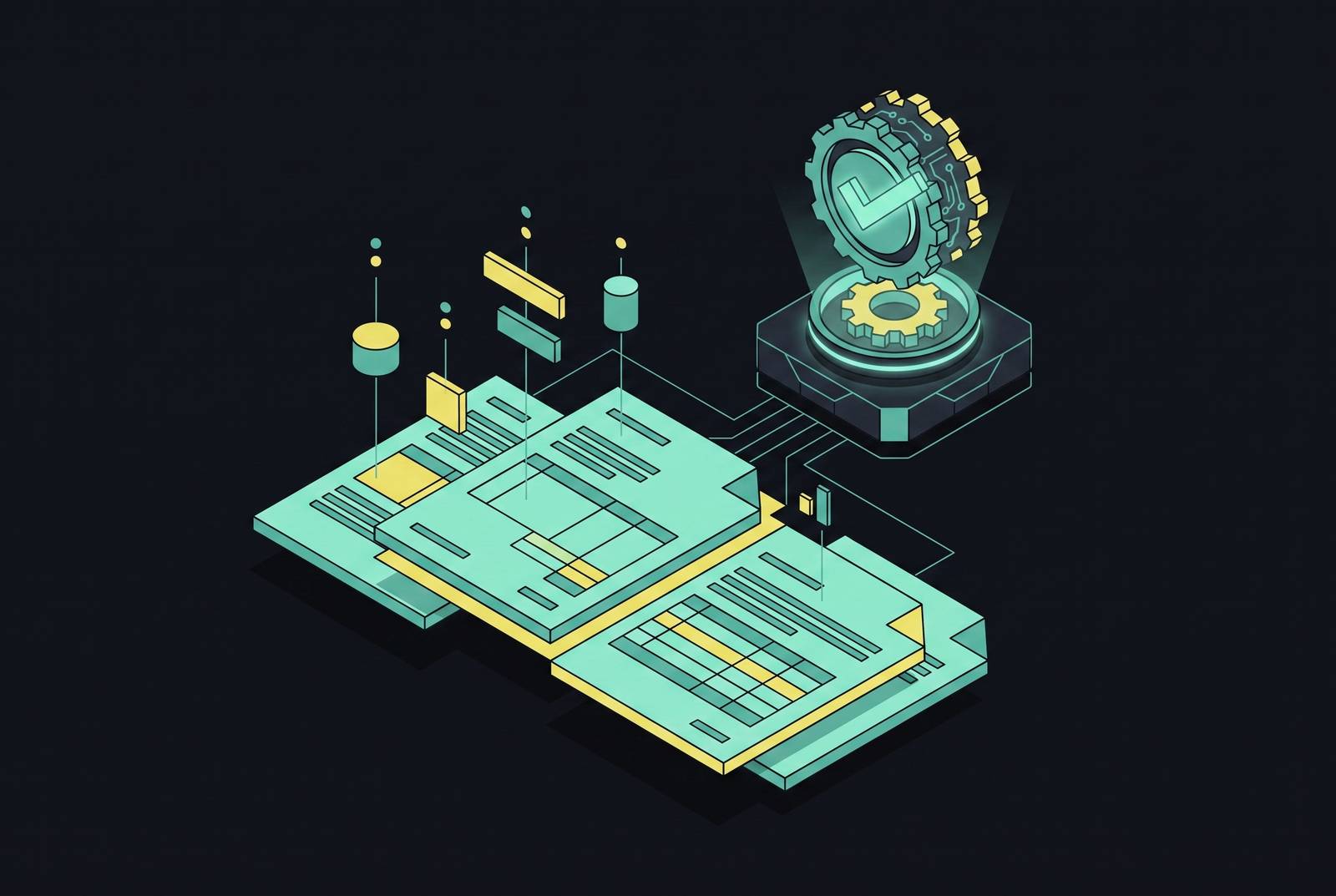
True auditability means traceability at the claim level. Every discrete piece of extracted information should be linkable back to a specific location in a specific document version: the page, the section, the passage. Not the document generally. Not the batch. The passage.
It also means reproducibility. If a reviewer re-runs extraction on the same input tomorrow, they should get the same output. And if they don't, there needs to be a documented, defensible reason why, one that a person unfamiliar with the underlying model can actually read and understand.
That last part is where things quietly fall apart. The audit trail cannot live only inside a model's internal representations or a proprietary vector index that no one outside the vendor can inspect. The person who needs to follow the chain is a paralegal, a financial examiner, or an FDA reviewer. They are not going to retrain an embedding model to understand what your system did. They are going to open a document, look at a citation, and either verify it or they can't. If they can't, you have a problem, and you often don't find out until that problem is expensive.
Where Current Systems Fall Short
Most extraction tools on the market were built for throughput, not accountability. Their architecture reflects that priority plainly. They are optimized to process volume and return structured outputs quickly. The provenance of those outputs, where exactly the information came from and how the system arrived at it, is at best an afterthought and at worst architecturally inaccessible.
I have asked vendors directly about citation granularity and gotten five-minute answers that never actually addressed the question. That's not evasion, necessarily. Sometimes it's just that the system genuinely wasn't designed with that question in mind, and the salesperson is discovering that in real time alongside you. It tells you something either way.
Retrieval-augmented generation improved things meaningfully. By grounding model outputs in retrieved passages, it created a natural citation layer that didn't exist in pure generative workflows. But even retrieval-augmented systems vary substantially in how they expose that layer. Some surface a source document name. Some surface a chunk of text. Very few surface the precise coordinates within a document, the document version hash, and the retrieval confidence in a form that can be logged, exported, and attached to a compliance record.
The gap between "the system retrieved something relevant" and "here is a defensible, auditable citation" is larger than vendors typically represent. Accuracy in vendor studies lands in the low nineties on clean, well-structured documents. That figure erodes considerably on the kinds of documents that actually populate regulated workflows: inconsistently formatted PDFs, scanned legacy files, contracts where critical definitions are buried in schedules, clinical documents with tables and footnotes that disrupt linear extraction. Those aren't edge cases. That's the job.
The Citation Requirement Is a Workflow Requirement
This is where the architecture discussion has to become a process discussion, because citation-ready extraction is not purely a technical problem. Even a technically sound citation layer fails in practice if the workflow doesn't create structured opportunities to capture and store those citations.
A reviewer who accepts an AI-extracted value and moves on without logging the source reference has broken the chain, regardless of what the underlying system could have provided. The tool can surface the citation. The process has to require it. Regulated organizations consistently underestimate this. They evaluate the AI component in isolation and treat workflow integration as an implementation detail. It isn't. The workflow is where accountability either gets enforced or quietly abandoned, and quiet abandonment is the norm until an auditor shows up.
In well-designed regulated workflows, every extracted claim that enters a decision record carries the source document identifier, the document version or timestamp, the location within the document, and the name of the reviewer who accepted the extraction. That last element matters more than people acknowledge. Human sign-off is not bureaucratic overhead. It is the mechanism by which legal and regulatory accountability attaches to an output that an automated system produced. Strip it out in the name of efficiency and you haven't streamlined the process; you've removed the only person who can be held responsible for it.
The Version Control Problem Nobody Talks About
Regulated documents are not static. Contracts get amended. Clinical protocols get revised. Financial statements get restated. An extraction system that is excellent at pointing to a source document has a compounding problem if it cannot distinguish between document versions.
The failure mode looks like this: an extraction is performed on version one of a policy document. The policy gets updated six months later. A year after that, during an audit, someone traces the extraction back to the source and finds that the cited passage no longer exists, or now says something materially different. Without version-locked citation, you cannot determine whether the extraction was accurate at the time it was performed. You just have a gap, and gaps in regulated contexts have a way of becoming very expensive.
This is routine in industries where documents iterate quickly under regulatory pressure. Pharmaceutical companies revising SOPs, financial institutions updating policy frameworks in response to examination findings, legal teams managing contract amendments across counterparties: in all of these contexts, version-blind extraction creates latent audit exposure that doesn't surface until the cost of addressing it has compounded significantly.
The architectural requirement is straightforward even if the implementation is not. Citations must be tied to immutable document identifiers, not mutable file names or folder paths. The system needs to remember not just where the file lives now, but what the file was at the moment of extraction — a kind of digital chain of custody that never forgets its own history. Think of it as the difference between a photograph and a painting: one captures exactly what was there; the other is always subject to the artist's memory. Few vendors have built this. Fewer still surface it in a way that integrates cleanly with existing records infrastructure.
What Procurement Should Actually Evaluate
If you are responsible for selecting or approving an AI extraction system for a regulated workflow, the evaluation criteria need to shift from accuracy benchmarks to accountability infrastructure. Accuracy matters, but it is table stakes. The harder question is what happens after the extraction, when something goes wrong and someone needs to prove what the system did and why.
Ask the vendor to demonstrate, concretely, what a citation looks like in their output. Not a description of what it contains. An actual example, on a document that resembles your own, showing the passage reference, the document identifier, and the retrieval metadata attached to it. Ask how the system handles document versions. Ask whether citations are exportable in a format that integrates with your existing record-keeping system, or whether they live only inside the vendor's platform. Ask what happens to your audit trail if you stop using the product.
That last question tends to produce uncomfortable pauses.
These questions feel procedural. They are actually existential. An extraction system that cannot answer them cleanly is a liability, regardless of its accuracy score, and the organizations that discover this tend to discover it at the worst possible moment.
The Standard to Hold
Regulated industries have spent decades building evidentiary standards around human-generated work product. The legal concept of a contemporaneous record, the regulatory expectation of a traceable audit trail, the clinical standard of source data verification: all of these frameworks assume that a human being, at every critical juncture, made a documented decision that can be examined after the fact.
AI extraction does not dissolve that standard. It extends the chain one link further back. The question is no longer only whether the human reviewer made a sound judgment. It is also whether the information they were reviewing was accurately extracted, from the right source, at the right version, in a way that can be independently verified.
Systems that meet that standard exist, though they require more deliberate architecture than most vendors have been incentivized to build. The organizations that figure this out early gain something more durable than a productivity lift: they gain the capacity to defend their work. In a regulated environment, that capacity is the product. Everything else is just speed.